spiritual disciplines. at the core of christian belief is that there is a god that is infinite and incomprehensible. s/he is outside of any of our categories of knowledge. whenever we speak of god, we use metaphorical language. there is no one-to-one correspondence between our language and expressions to that of god. now this god, as christians believe, has chosen to interact with this world that we experience. exactly how this interaction works is a mystery. the celtics used to call the spaces of interaction, thin spaces. so spiritual disciplines are practices that we undertake with our physical bodies to prepare ourselves to become a thin space.
beauty. there seems to be two types of knowledge claims. a mathematical claim that 7 + 4 = 11 is true in all times, cultures and expereince. to use liebniz's terms, it is true in all "possible worlds." the second type is a value judgment. these are things such as good and bad, or beautiful and ugly. what people call beautiful does vary with time, culture and experience. empirically, this world is pluralistic in its value judgments. interestingly, chistian theology has chosen to apply value judgments to the characteristics of god. even further, we say that god is goodness, god is beauty, god is love, god is justice. so in order to make value judgments, it seems that one would have to know god.
how does one come to know god? by experiencing god in your life. which it seems the best way to go about having these experiences through spiritual disciplines.
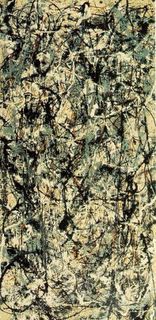
what about the practice of goodness, justice and beauty? i would conclude that the best expressions would come from god as s/he interacts with our world. in the context of spiritual disciplines, an artist can become a thin space where beauty can overflow.
questions for further reflection:
- what is the role of the artist's intention, or should she even be intentional?
- what about iconography? it is viewed as a spiritual discipline itself, bu is it art?
- should we only observe christian artistic expressions, or can the metaphors of god be found in all expressions, whether they by buddhist, muslim or other?
- is art a communal or private expression?