Showing posts with label aesthetics. Show all posts

24 May 2007

spiritual disciplines and the beautiful


spiritual disciplines. at the core of christian belief is that there is a god that is infinite and incomprehensible. s/he is outside of any of our categories of knowledge. whenever we speak of god, we use metaphorical language. there is no one-to-one correspondence between our language and expressions to that of god. now this god, as christians believe, has chosen to interact with this world that we experience. exactly how this interaction works is a mystery. the celtics used to call the spaces of interaction, thin spaces. so spiritual disciplines are practices that we undertake with our physical bodies to prepare ourselves to become a thin space.

beauty. there seems to be two types of knowledge claims. a mathematical claim that 7 + 4 = 11 is true in all times, cultures and expereince. to use liebniz's terms, it is true in all "possible worlds." the second type is a value judgment. these are things such as good and bad, or beautiful and ugly. what people call beautiful does vary with time, culture and experience. empirically, this world is pluralistic in its value judgments. interestingly, chistian theology has chosen to apply value judgments to the characteristics of god. even further, we say that god is goodness, god is beauty, god is love, god is justice. so in order to make value judgments, it seems that one would have to know god.

how does one come to know god? by experiencing god in your life. which it seems the best way to go about having these experiences through spiritual disciplines.

what about the practice of goodness, justice and beauty? i would conclude that the best expressions would come from god as s/he interacts with our world. in the context of spiritual disciplines, an artist can become a thin space where beauty can overflow.

questions for further reflection:
  • what is the role of the artist's intention, or should she even be intentional?
  • what about iconography? it is viewed as a spiritual discipline itself, bu is it art?
  • should we only observe christian artistic expressions, or can the metaphors of god be found in all expressions, whether they by buddhist, muslim or other?
  • is art a communal or private expression?

14 March 2007

subjective universality


to take a step back from my last post (the language of theology), i want to look at aesthetic judgments in general, not just from sibley's perspective.

david hume and immanuel kant were really the first ones to analyze aesthetic judgments, which they called judgments of taste.

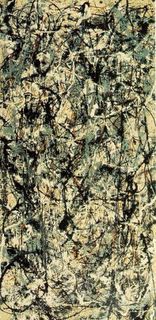
judgments of taste come from an inner subjective aesthetic experience. this is in one sense an empirical observation. the same object may be called ugly by one person and beautiful by another, or they are just left simply confused (think jackson pollock). there seems to be as many different aesthetic opinions as there are peoples, or at least cultures.

but when a person ascribes the quality of beauty to an object there is the intention of universal application. we want others to call beautiful what we have called beautiful. there is also the example that david hume gave:
whoever would assert an equality of genius and elegence between ogilby and milton, or bunyan or addison, would be thought to defend no less an extravagance, than if he had maintained a mole-hill to be as high as teneriffe, or a pond as extensive as the ocean. though there may be found persons, who give the preference to the former authors, no one pays attention to such a taste; and we pronounce without scruple the sentiment of these pretended critics to be absurd and ridiculous (hume, of the standard of taste)

the point being that who has ever heard of addison or ogilby? there seems to be a universality to the statement "milton and bunyan are aesthetically pleasing."

so how does one reconcile this subjective universality? how does one make a justified judgment of taste?


is there a subjective universality to theology?

universality is easy to admit of. yes we live in the meta-narrative of YHWH's creation, redemption, and restoration. the statement "jesus is lord" does not change to "buddha is lord" when we find ourselves in a different context.

subjectivity in theology? maybe a little tougher to swallow. we want there to be an objective truth to our theological claims. we want there to be a definite rightness or wrongness to what we believe and say about god. but i think if we are honest, our theological convictions have a lot to do with our own experiences in the world and in church (some healthy and some painful). our convictions may have more to do with what denomination we grew up in than any actual adherence to the truth.

i don't know, these are just thoughts to play with.


articles for further reading:
aesthetic judgment by nick zangwill
hume's aesthetics by ted gracyk
kant's aesthetics and teleology by hannah ginsborg

12 March 2007

the language of theology

frank sibley in his paper "aesthetic concepts," makes the claim that aesthetic terms are fundamentally different than non-aesthetic terms. this means that any aesthetic term cannot be further explained by a non-aesthetic term. in other words there are no necessary and sufficient conditions to define an aesthetic term such as 'graceful,' 'delicate,' 'gaudy,' or even 'beautiful.' aesthetic judgments are in a sense metaphors with no truth-functionality, meaning that a particular aesthetic judgment can not be true or false. but sibley does not want to commit to complete subjectivity here, he wants to say that there cann be 'good' or 'bad' judgments. a fine line.

aesthetic judgments are much like ethical judgments. they are grouped in what are 'value' judgments. so here is my question: are theological judgments value judgments?

if the language of theology could be analyzed like the language of aesthetics, many things would change.
we may no longer feel the need to use scientific techniques to prove the validity of scripture or our religion. we may not feel the need to distinguish ourselves from other christians because they interpret a passage of scripture differently than us.

maybe we could actually find beauty in the diversity of christian thought.

here begins my rambling.

03 February 2007

plato, pt. 2

"education in music is most sovereign, because more than anything else rhythm and harmony find their way to the inmost soul and take strongest hold upon it, bringing with them and imparting grace, if one is rightly trained, and otherwise the contrary?"

what implications does this have for theological and spiritual formation? just because descartes says the only way to certain knowledge is through the rational mind does mean that we in the church have to base our training and formation on such a "heady" pursuit.

might our training be more holistic if music and the arts were used in our formation? what might our sunday schools look like?

31 January 2007

commenting on plato's aesthetics


in these next couple of meditations i wanted to comment on plato's republic. the first is on a claim that is rather quite disturbing to my conemporary mind, and the second is a psychological claim that i think has further implications for theology.

"is it, then, only the poets that we must supervise and compel to embody in their poems the semblance of the good character or else not write poetry among us."

why is it that we are so afraid of poets? why do they often make us uncomfortable? In another dialogue (the ion), plato/socrates reaches the conclusion that poets are divinely inspired by the muses. poets are vessels for the gods to impart truth and knowledge. but it is not only the poets that are inspired, the intepreter and the audience are also inspired by the muses. so why in plato's ideal society, would he want to, in contemporary terms, censor the vessels of divine "revelation," the bearers of truth, or the prophets.

societies and religious groups like to silence prophets while they are walking about on this earth. often prophets do not come from the established elite. they don't say or do things that would be considered the norm. but we are comfortable with the norm. we like to think that our accepted teachings and morals are the truth. when a poet/prophet challenges us to look beyond ourselves for the truth, we fidget and squirm and do everything possible to shut them up.

it is only after we have banished, hurt or killed the poet/prophet that we realize we were wrong.

and so i offer this challenge to christendom. stop being so arrogant and let the poet/prophets into our presence. let them reveal truth that gets beyond our social constructs that we deem holy and righteous.