25 February 2007

happy birthday isaac


you only turn 4 once. today is the culmination of a week of cake, ice cream, family, and curious george.


Let mercy lead
Let love be the strength in your legs
And in every footprint that you leave
There'll be a drop of grace


- rich mullins

10 February 2007

revelations of divine love fragment (ch. 5)


at the same time, our lord showed me a spiritual vision of his familiar love. i saw that for us he is everything that we find good and comforting. he is our clothing, wrapping us for love, embracing and enclosing us for tender love, so that he can never leave us, being himself everything that is good for us, as i understand it.

in this vision he also showed a little thing, the size of a hazel-nut in the palm of my hand, and it was as round as a ball. i looked at it with my mind's eye and thought, 'what can this be?' and the answer came to me, 'it is all that is made' i wondered how it could last, for it was so small i thought it might suddenly have disappeared. and the answer in my mind was, 'it lasts and will last for ever because god loves it; and everything exists in the same way by the love of god.' in this little thing i saw three properties: the first is that god made it, the second is that god loves it, the third is that god cares for it. but what the maker, the carer and the lover really is to me, i cannot tell; for until i become one substance with him, i can never have complete rest or true happiness; that is to say, until i am so bound to him that there is no created thing between my god and me.

we need to know the littleness of all created beings and to set at nothing everything that is made in order to love and posses god who is unmade. this is the reason why we do not feel complete ease in our hearts and souls: we look here for satisfaction in things which are so trivial, where there is no rest to be found, and do not know our god who is almighty, all wise, all good; he is rest itself. god wishes to be known, and is pleased that we should rest in him; for all that is below him does nothing to satisfy us; and this is why, until all that is made seems as nothing, no soul can be at rest. when a soul sets all at nothing for love, to have him who is everything, then he is able to receive spiritual rest.

our lord god also showed that it gives him very great pleasure when a simple soul comes to him in a bare, plain and familiar way. for, as i understand this showing, it is the natural yearning of the soul touched by the holy ghost to say, 'god, of your goodness, give me yourself, you are enough for me, and anything less that i could ask for would not do you full honour. and if i ask anything that is less, i shall always lack something, but in you alone i have everything.' and such words are very dear to the soul and come very close to the will of god and his goodness; for his goodness includes all his creatures and all his blessed works, and surpasses everything endlessly, for he is what has no end. and he has made us only for himself and restored us by his blesed passion and cares for us with his blessed love. and all this is out of his goodness.


julian of norwich. revelations of divine love. trans. by elizabeth spearing. penguin books, 1998.

07 February 2007

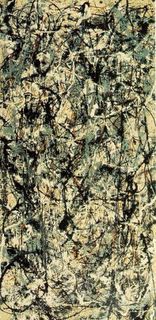
being jackson pollock


here is a great space to paint like jackson pollock.
have fun creating and being.

instructions: move your cursor around on the page, click to change colors.

04 February 2007

hiv/aids test

test your knowledge of the hiv/aids pandemic here.

03 February 2007

plato, pt. 2

"education in music is most sovereign, because more than anything else rhythm and harmony find their way to the inmost soul and take strongest hold upon it, bringing with them and imparting grace, if one is rightly trained, and otherwise the contrary?"

what implications does this have for theological and spiritual formation? just because descartes says the only way to certain knowledge is through the rational mind does mean that we in the church have to base our training and formation on such a "heady" pursuit.

might our training be more holistic if music and the arts were used in our formation? what might our sunday schools look like?

31 January 2007

commenting on plato's aesthetics


in these next couple of meditations i wanted to comment on plato's republic. the first is on a claim that is rather quite disturbing to my conemporary mind, and the second is a psychological claim that i think has further implications for theology.

"is it, then, only the poets that we must supervise and compel to embody in their poems the semblance of the good character or else not write poetry among us."

why is it that we are so afraid of poets? why do they often make us uncomfortable? In another dialogue (the ion), plato/socrates reaches the conclusion that poets are divinely inspired by the muses. poets are vessels for the gods to impart truth and knowledge. but it is not only the poets that are inspired, the intepreter and the audience are also inspired by the muses. so why in plato's ideal society, would he want to, in contemporary terms, censor the vessels of divine "revelation," the bearers of truth, or the prophets.

societies and religious groups like to silence prophets while they are walking about on this earth. often prophets do not come from the established elite. they don't say or do things that would be considered the norm. but we are comfortable with the norm. we like to think that our accepted teachings and morals are the truth. when a poet/prophet challenges us to look beyond ourselves for the truth, we fidget and squirm and do everything possible to shut them up.

it is only after we have banished, hurt or killed the poet/prophet that we realize we were wrong.

and so i offer this challenge to christendom. stop being so arrogant and let the poet/prophets into our presence. let them reveal truth that gets beyond our social constructs that we deem holy and righteous.

02 November 2006

German Romantic fragments: Friedrich Schlegel

One can only become a philosopher, not be one. As soon as one thinks one is a philosopher, one stops becoming one.

Philosophy is the real homeland of irony, which one would like to define as logical beauty: for wherever philosophy appears in oral or written dialogues – and is not simply confined into rigid systems – there irony should be asked for and provided.

Irony is the form of paradox. Paradox is everything simultaneously good and great.

In investigating ancient Greek mythology, hasn’t too little attention been paid to the human instinct for making analogies and antitheses? The Homeric world of gods is a simple variation of the Homeric world of men . . . . In that old remark of Aristotle that one gets to know people through their gods, one finds not only the self-illuminating subjectivity of all theology, but also the more incomprehensible innate spiritual dualism of man.

Jumbled ideas should be the rough drafts of philosophy.

The imagination is man’s faculty for perceiving divinity.

Only someone who has his own religion, his own original way of looking at infinity, can be an artist.

Every particular conception of God is mere gossip. But the idea of God is the Idea of ideas.

The priest as such exists only in the invisible world. In what guise is it possible for him to appear among men? His only purpose on earth will be to transform the finite into the infinite; hence he must be and continue to be, no matter what the name of his profession, an artist.

No idea is isolated, but is what it is only in combination with all other ideas.

Out of this disturbance and doubt, knowledge might emerge.

All the greatest truths of every sort are completely trivial and hence nothing is more important than to express them forever in a new way and, wherever possible, forever more paradoxically, so that we won’t forget they still exist and that they can never be expressed in their entirety.

German Romantic fragments: Novalis

He that seeks, doubts.

If someone merely speaks for the sake of speaking, he utters the most splendid, original truths. But if he wants to talk about something definite, the whims of language make him say the most ridiculous false stuff.

We are now so limited that there is very little we can enjoy wholly, and in the end is it not better to absorb and assimilate one beautiful object entirely that alight upon a hundred, tasting everything, and dulling our senses soon enough with often conflicting demipleasures, without having profited anything for eternity?

The drive to organization is the drive to turn everything into instrument and means.

Poetry is the true and absolute reality. This is the heart of my philosophy. The more poetic, the more true.

German Romantic fragments: Friedrich Holderlin

Unless we make ideas aesthetic, that is, mythological, they are of no interest to the people, and vice versa: until mythology is rational, it will be an embarrassment to philosophy. Thus those who are enlightened and those who are not must finally make common cause, mythology must become philosophical, to make the people rational, and philosophy must become mythological, to make philosophy sensuous.

German Romantic Fragments: Friedrich Schiller

The moral purpose of a work of art or an action contributes so little to its beauty that these moral purposes are best hidden, and must appear to come from the nature of the thing completely freely and without force, if their beauty is not to be lost. Thus a poet may not excuse the lack of beauty in his work by its moral intentions.

A moral action would be a beautiful action only if it appears as an immediate outcome of nature. In a word: a free action is beautiful action, if the autonomy of the mind and autonomy of appearance coincide.

German Romantic fragments: Karl Phillip Moritz

Our consideration of the creative imitation of the beautiful, combined with the pure pleasure of the beautiful artwork itself, can, to be sure, create a lively concept in us which heightens the pleasure the artwork creates in us: -- but since our highest pleasure in the beautiful still cannot grasp the becoming of this beauty from its own power, the single highest pleasure remains the creative genius himself who produces it. And the beautiful has therefore already reached its highest purpose in its generation, in its coming to be. Our subsequent pleasure in it is only the consequence of its being; and in the great plan of nature, the creative genius exists first for his own sake and only then for our sake.

The beautiful is beautiful precisely because the power of thought can no longer ask why it is beautiful.

German Romantic fragments: J.G. Hamann

The senses and passions speak and understand nothing but images. The entire store of human knowledge and happiness consists in images.

The more vividly this idea of the image of the invisible God dwells in our heart, the more able we are to perceive his loving-kindness in his creatures; and to taste, and see it and grasp it with our hands. Every impressions of Nature in man is not only a memorial, but also a warrant of fundamental truth: who is the Lord. Every counter-effect of man in God’s created word is charter and seal that we partake of the divine nature and that we are his offspring.

Let us now hear the sum total of his (referring to himself) newest aesthetic, which is the oldest: Fear God, and give glory to Him; for the time of His judgement is come; and worship Him that made heaven, and earth, and the sea, and the fountains of waters!

German Romantic fragments

These are a series of fragments that I have found thought provoking from several techincal writings of the German Romantics. I have pulled them from a collection entitled Classic and Romantic German Aesthetics edited by J.M. Bernstein.

Enjoy

03 September 2006

I Forgot

I remember the smell of your Sanctuary.

I remember your Embrace.

I remember the taste of your Real Presence.

I remember your Love Songs.

I forgot – was it real?

was it true?

Is there such a thing as Providence?

Incarnation?

Love?

Grace? – I forgot.